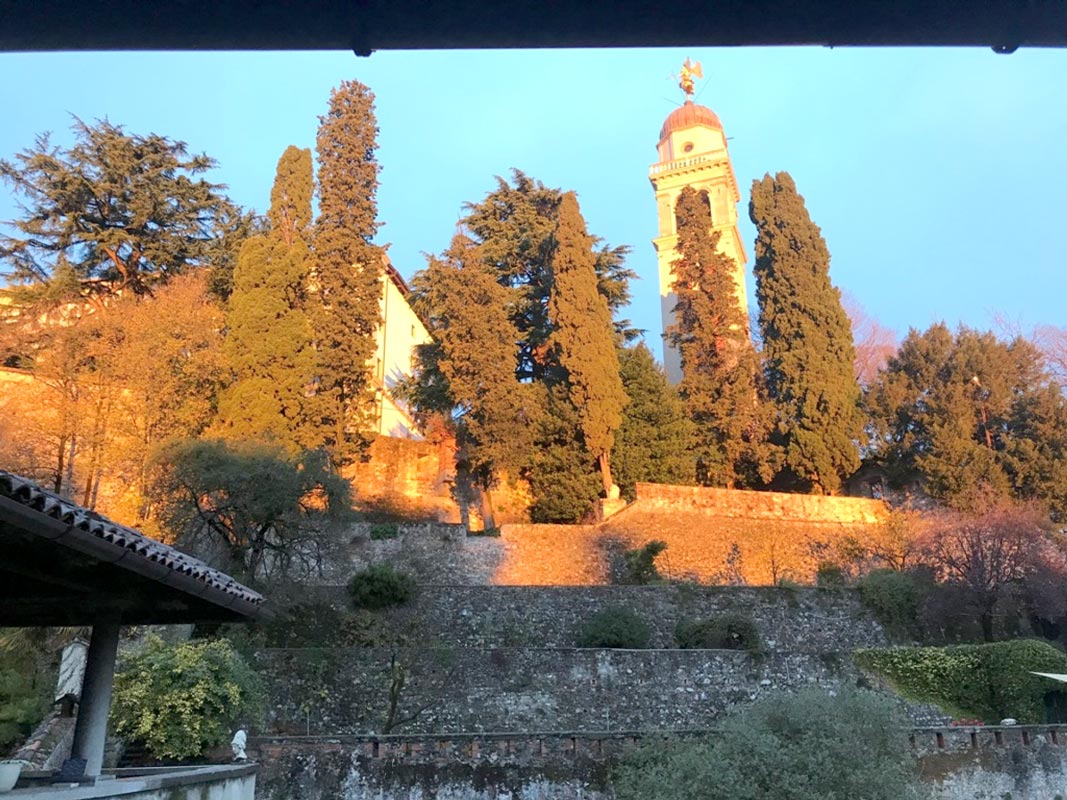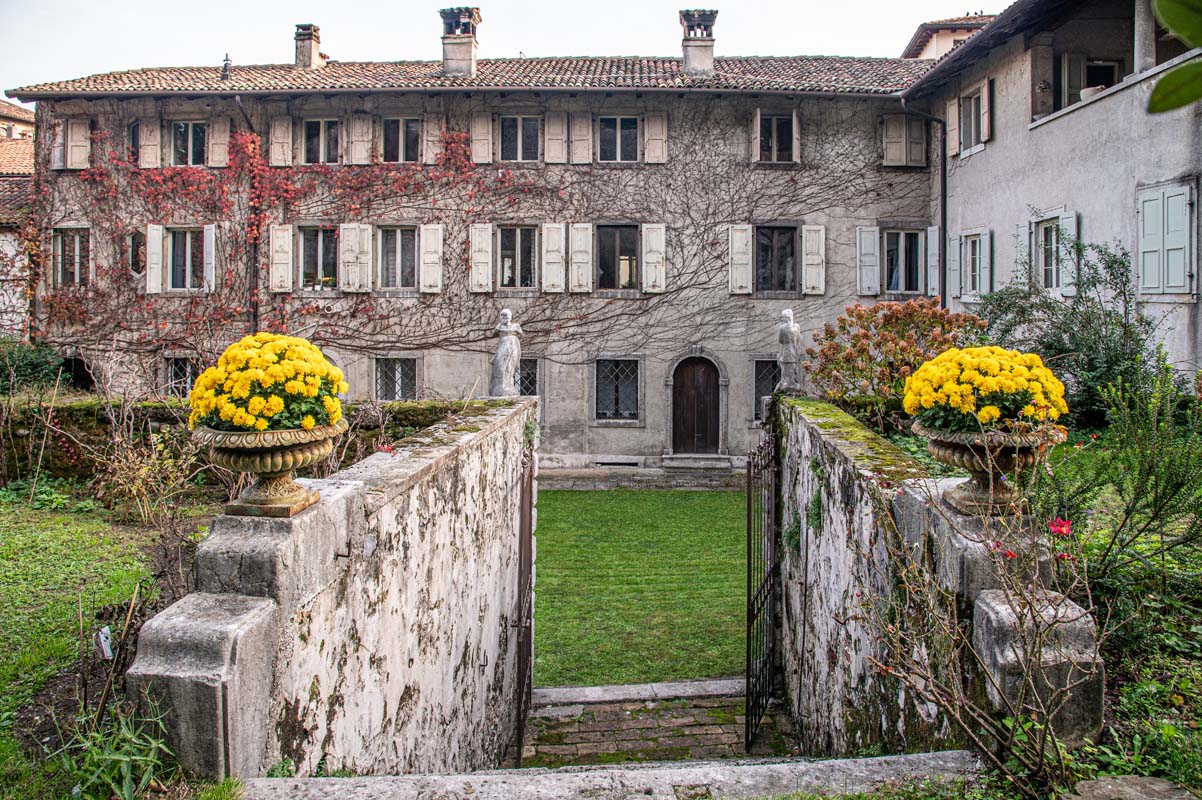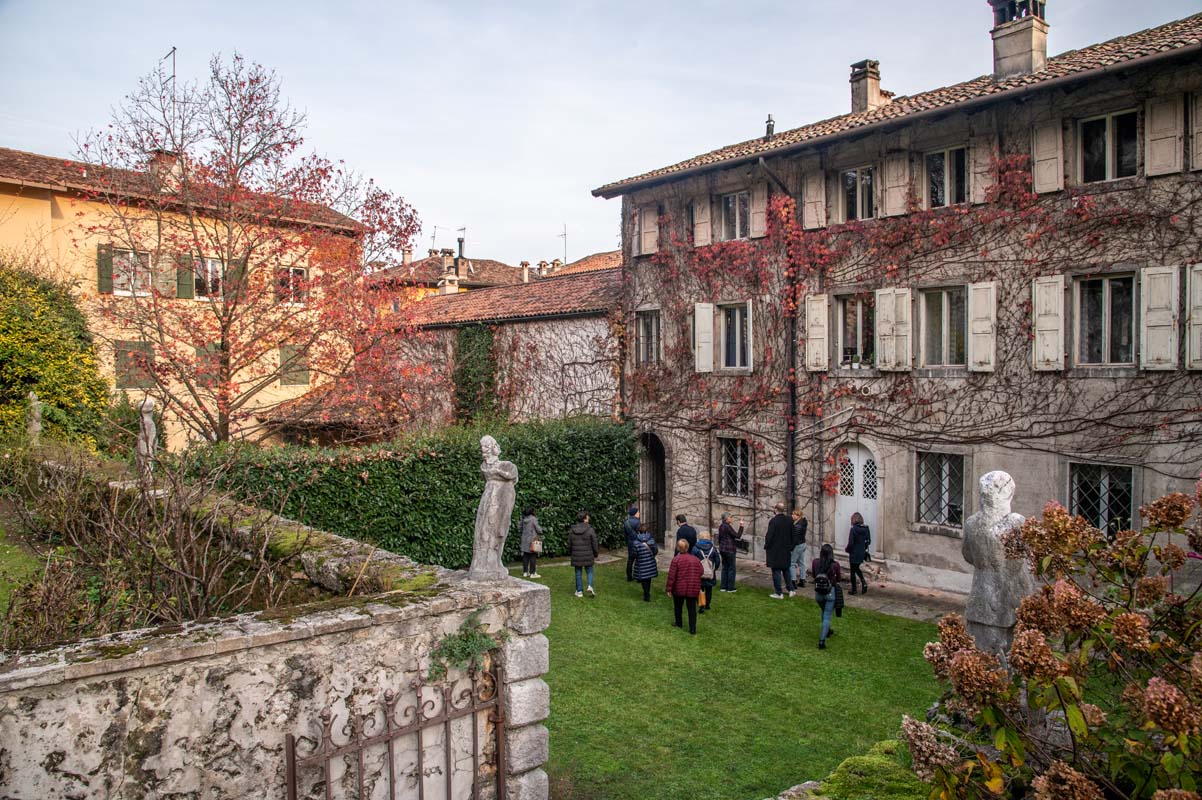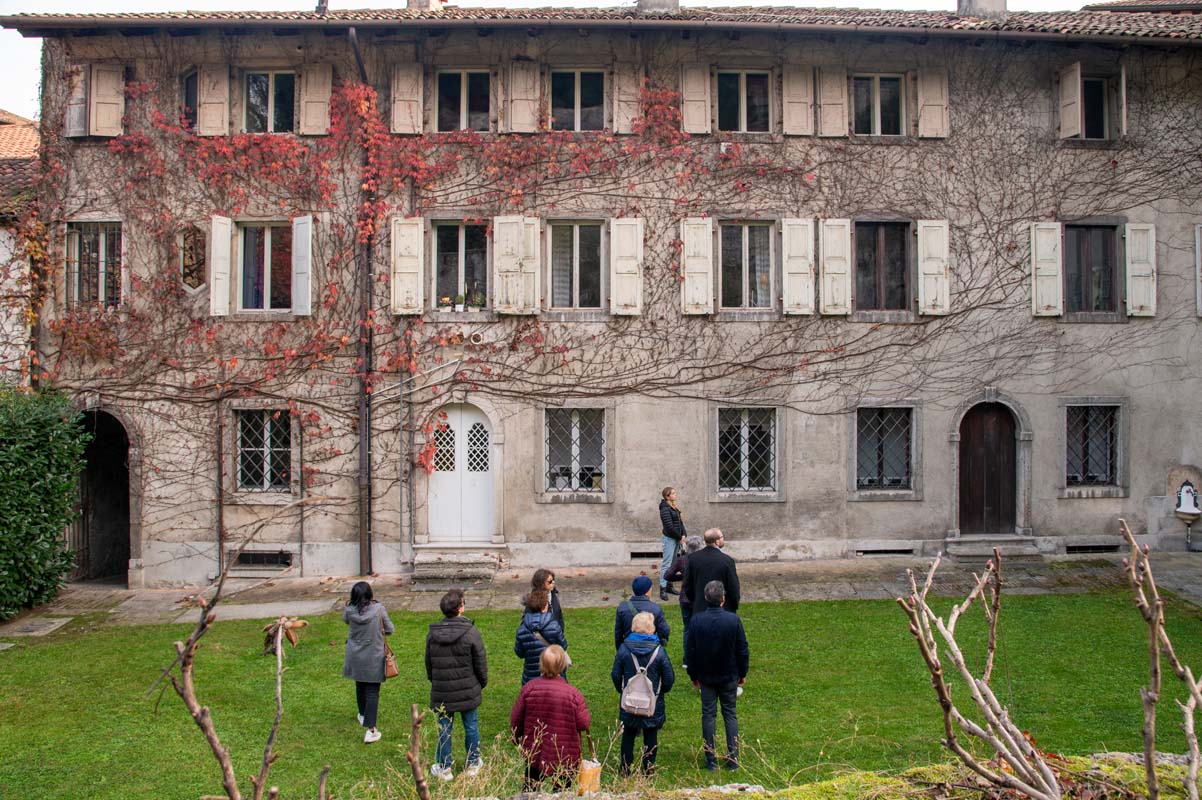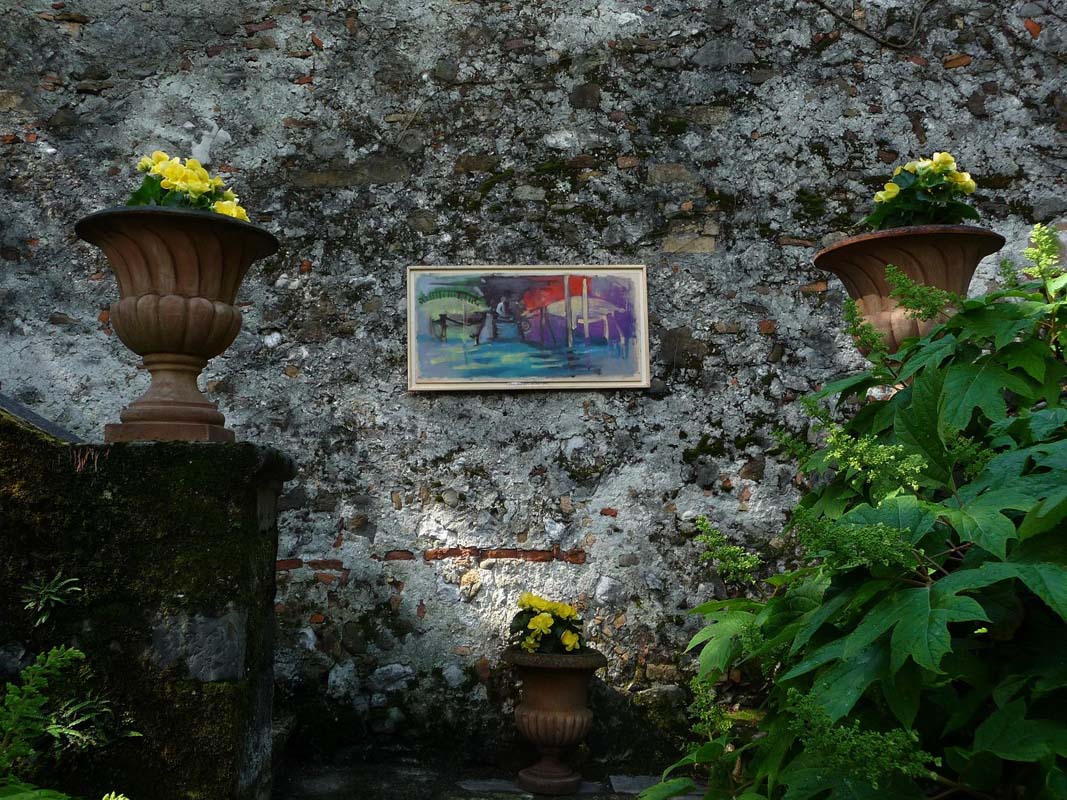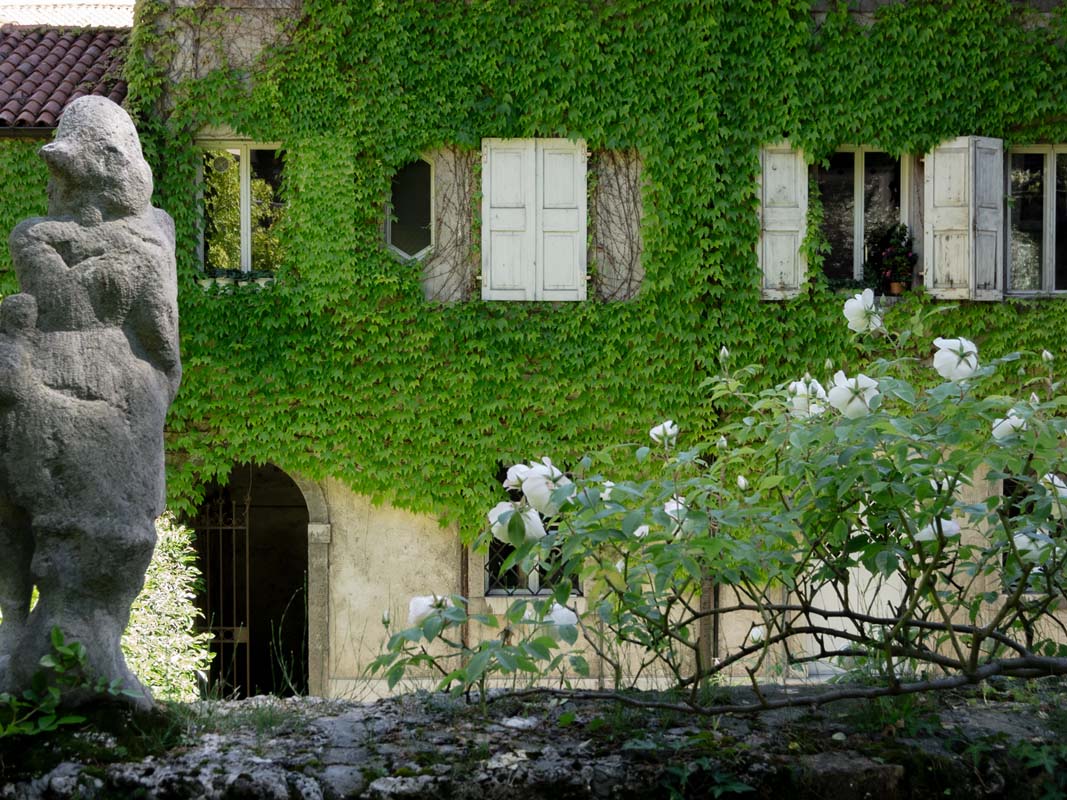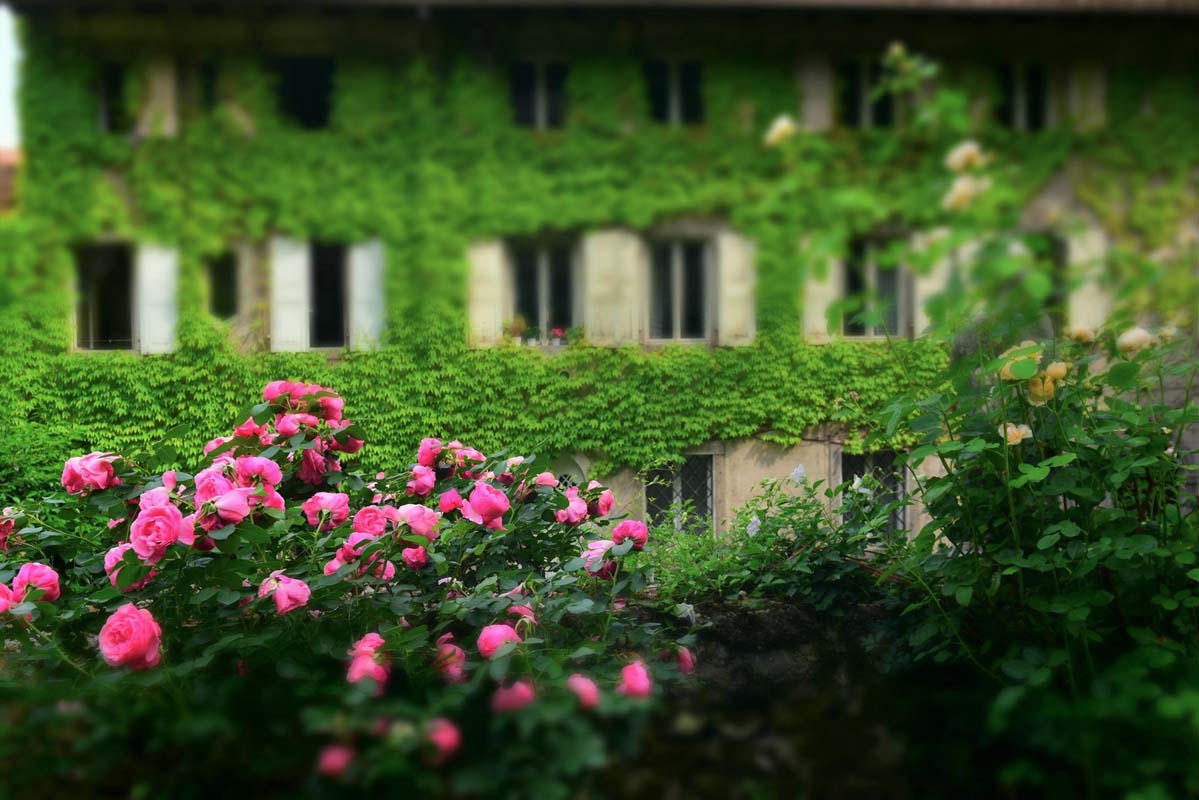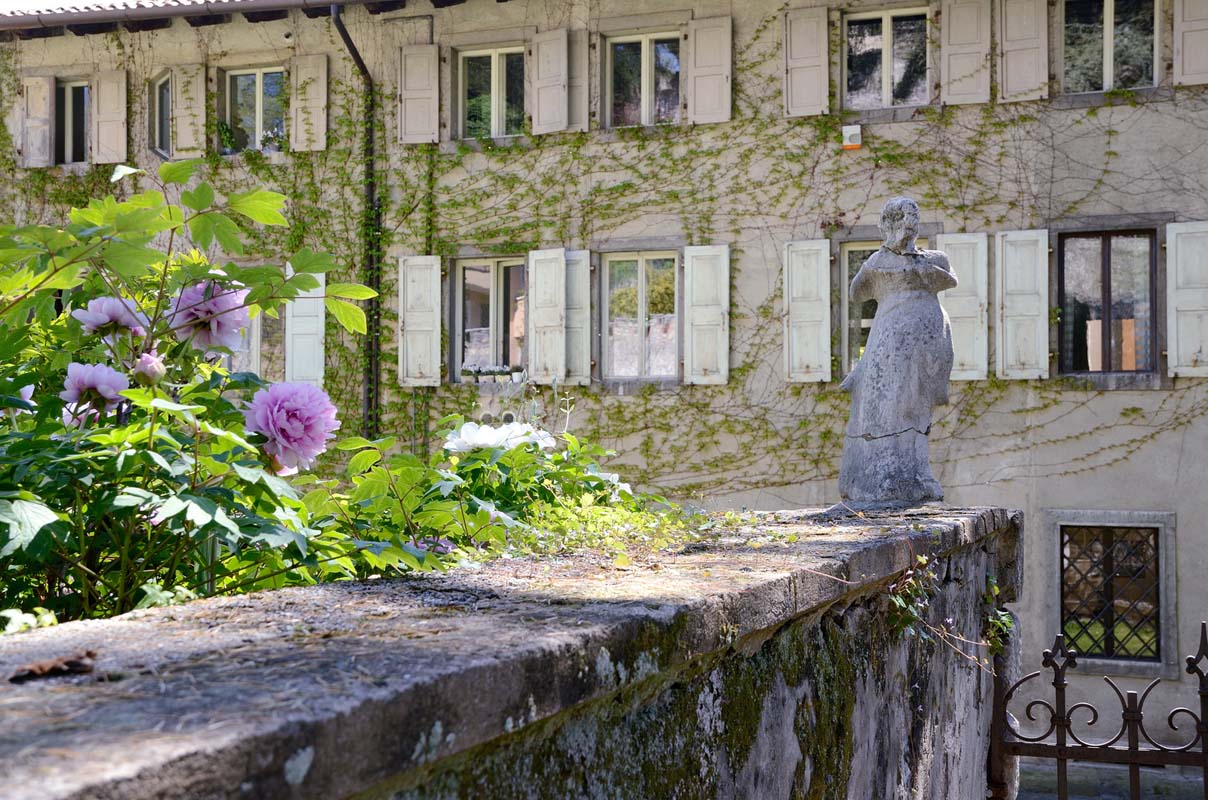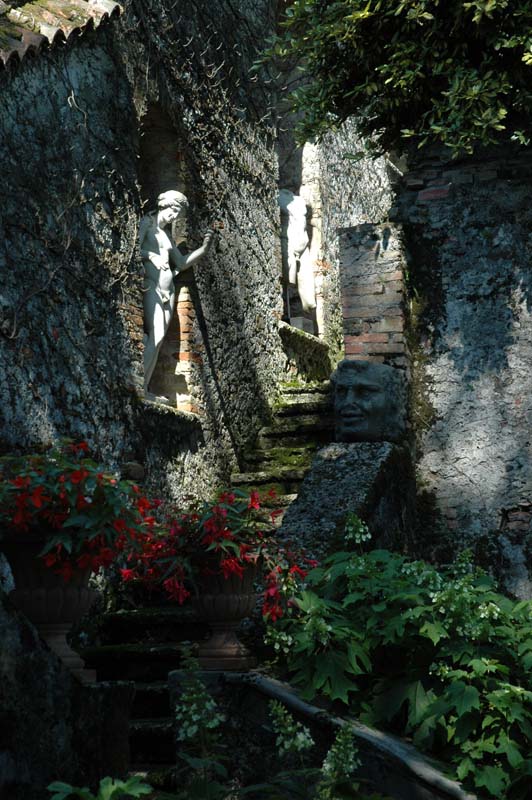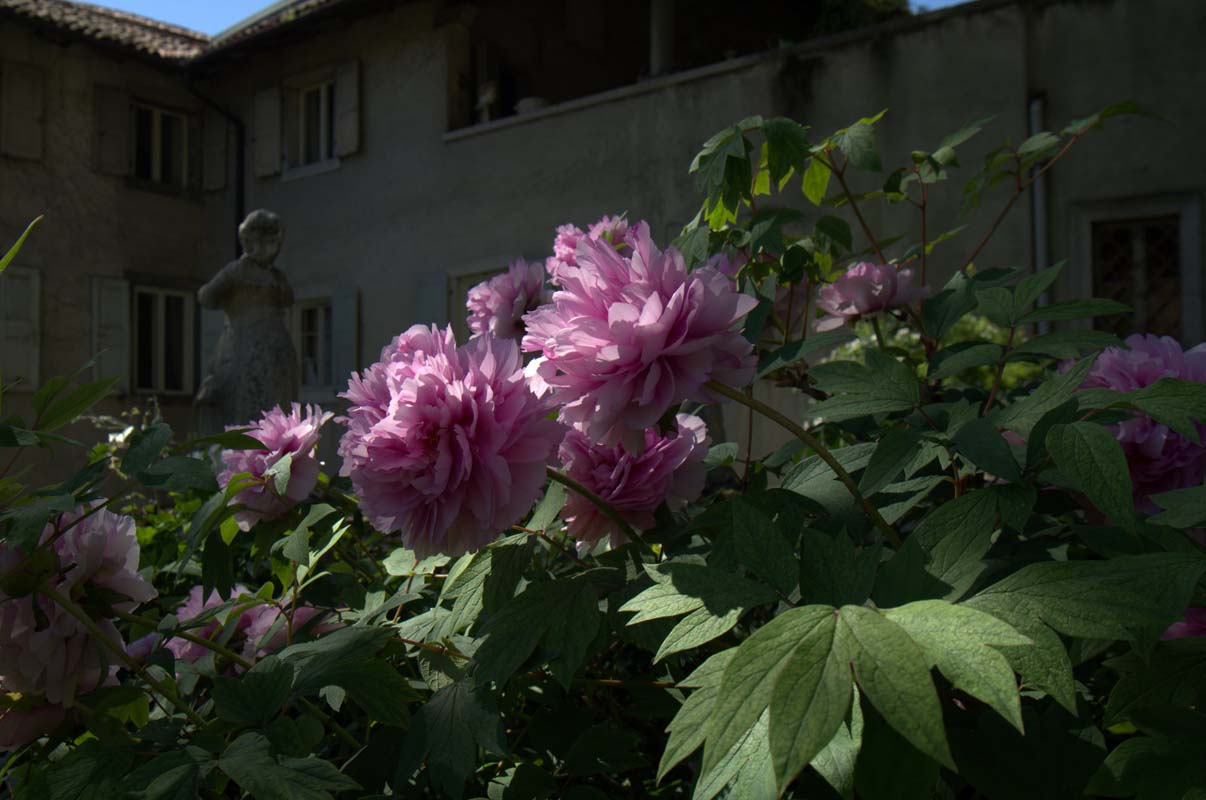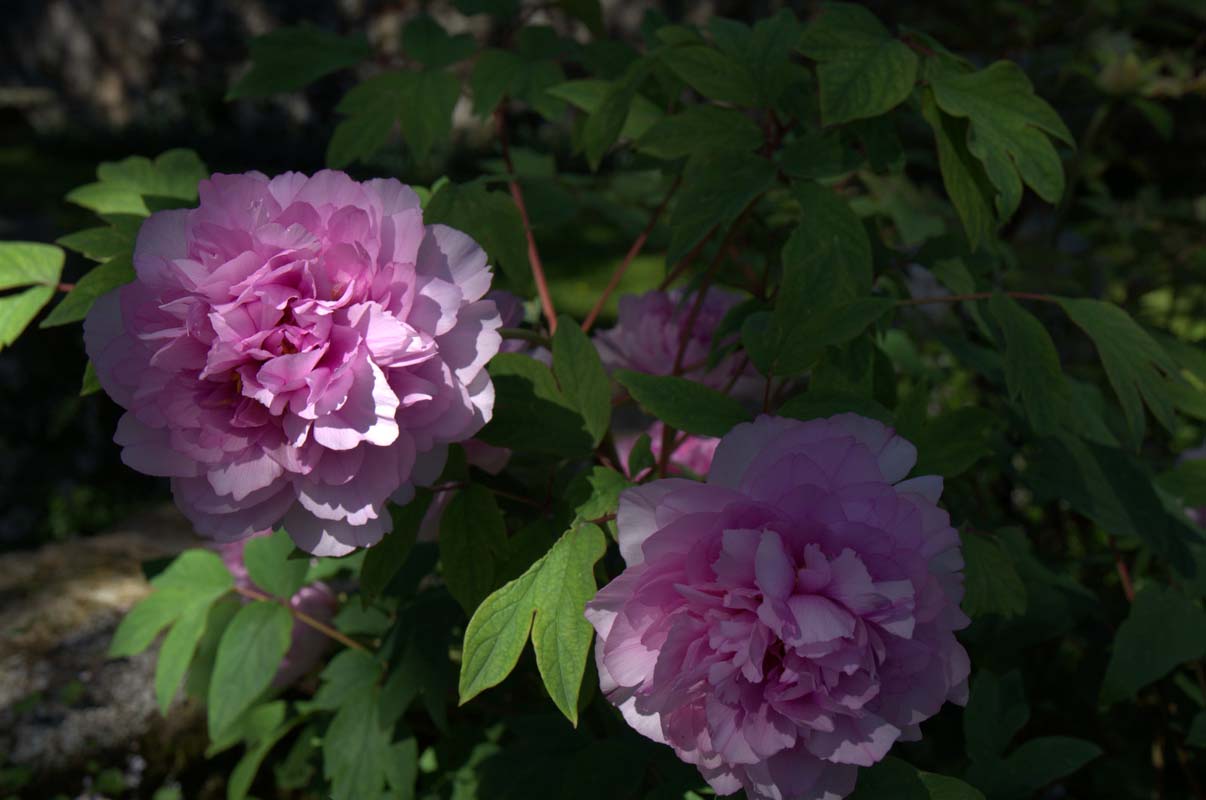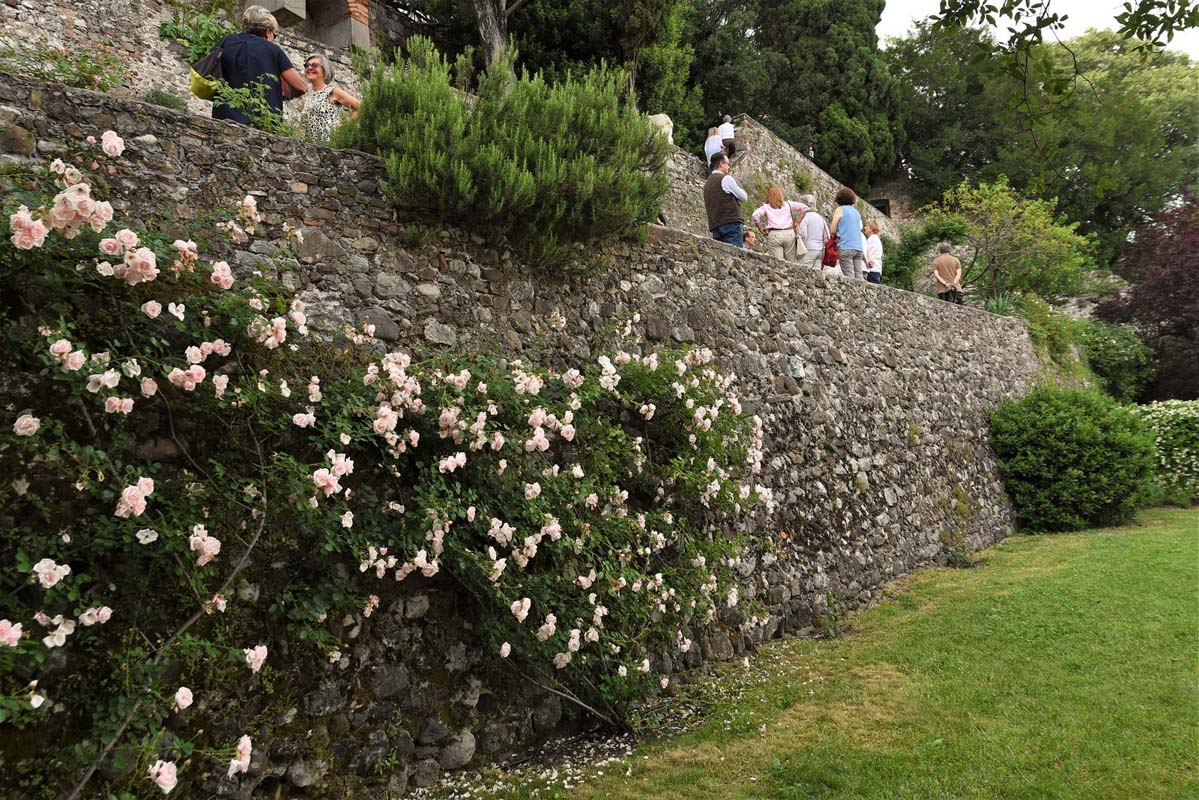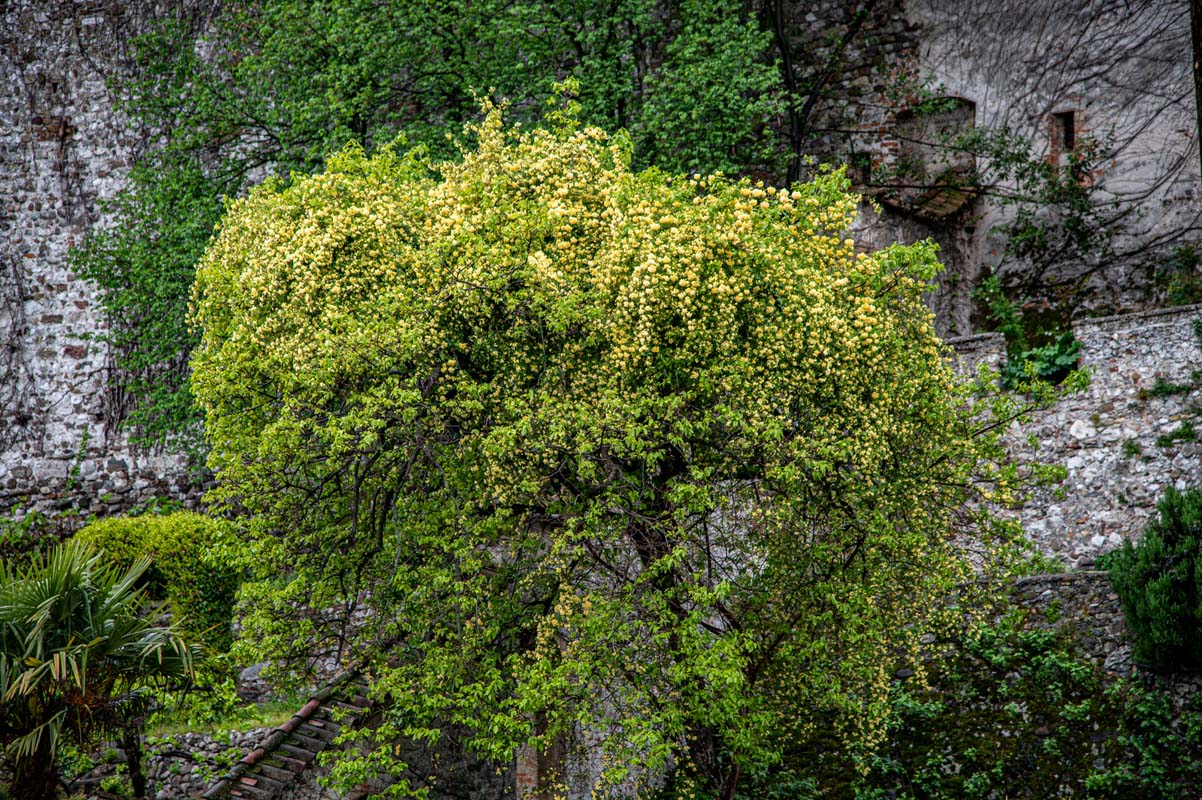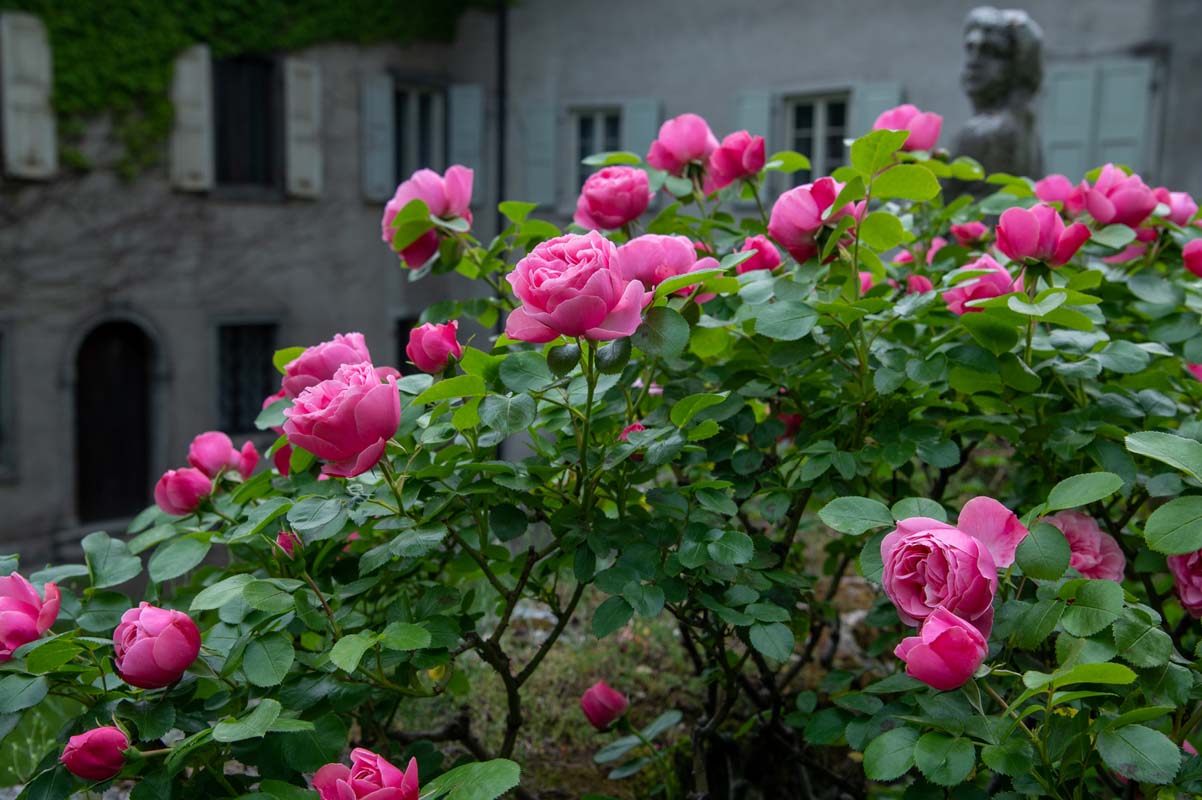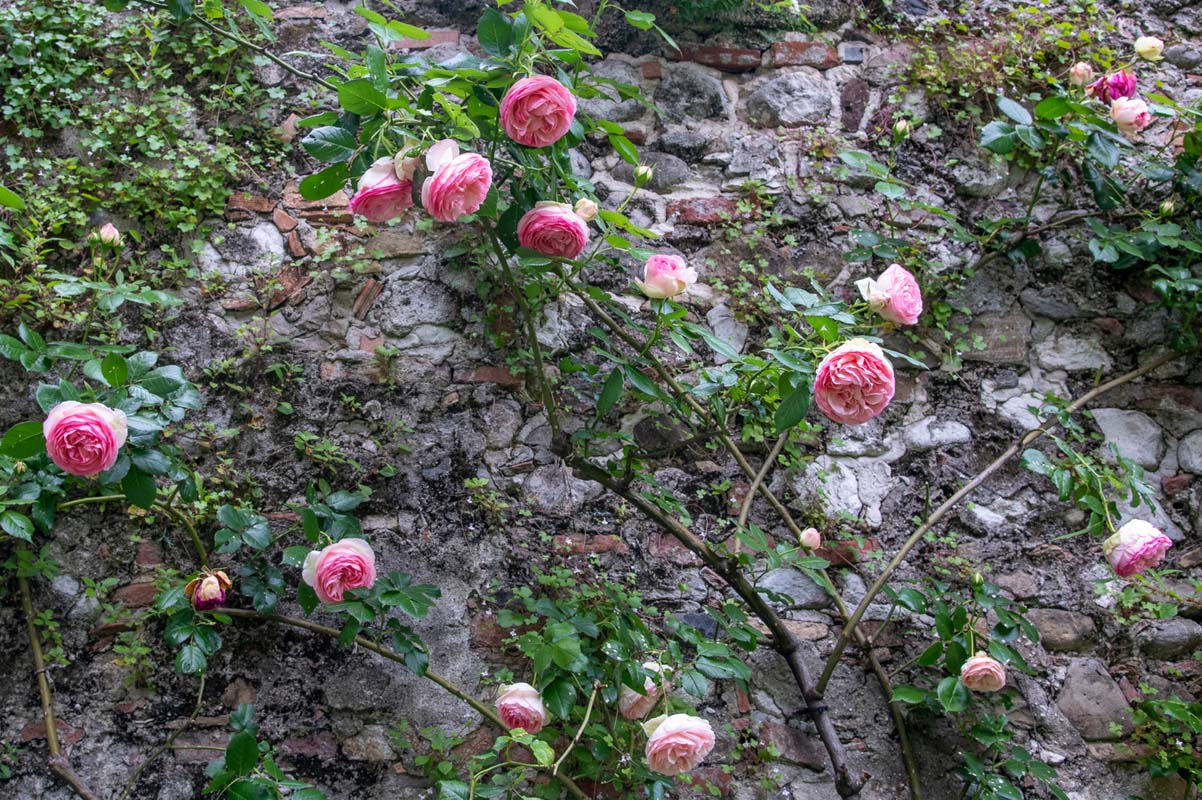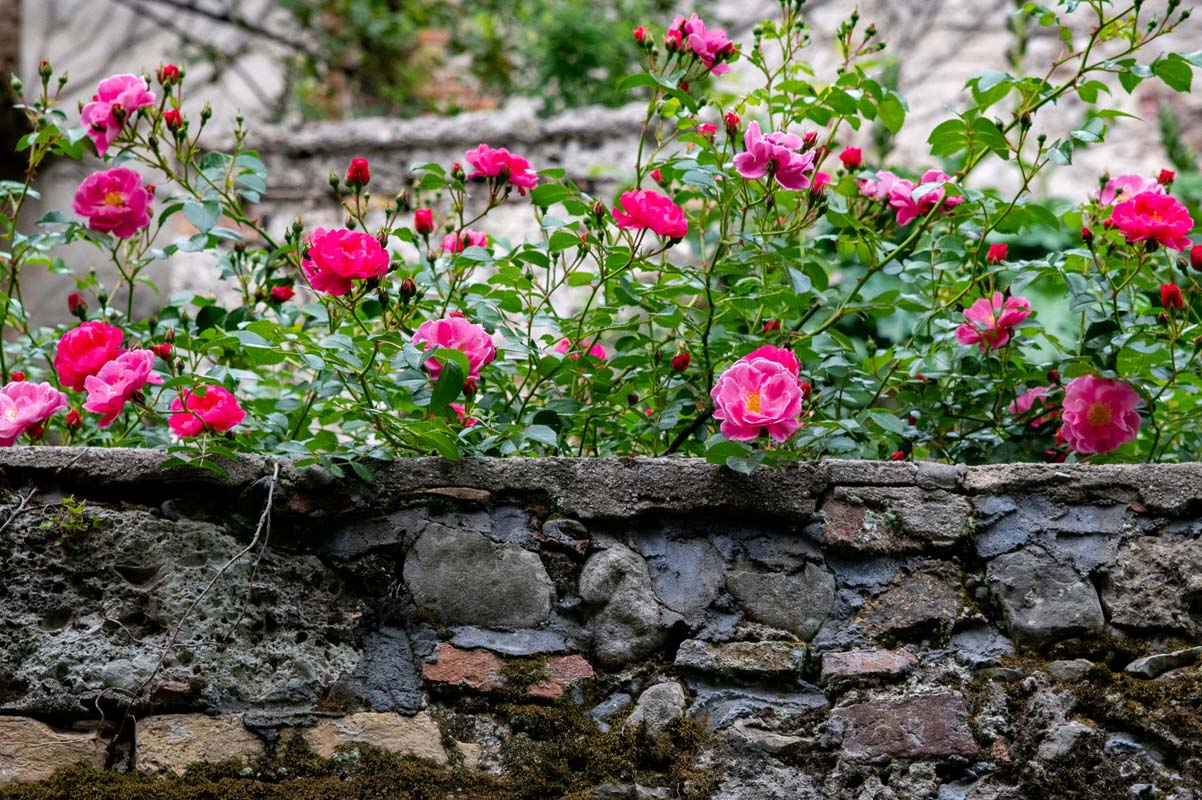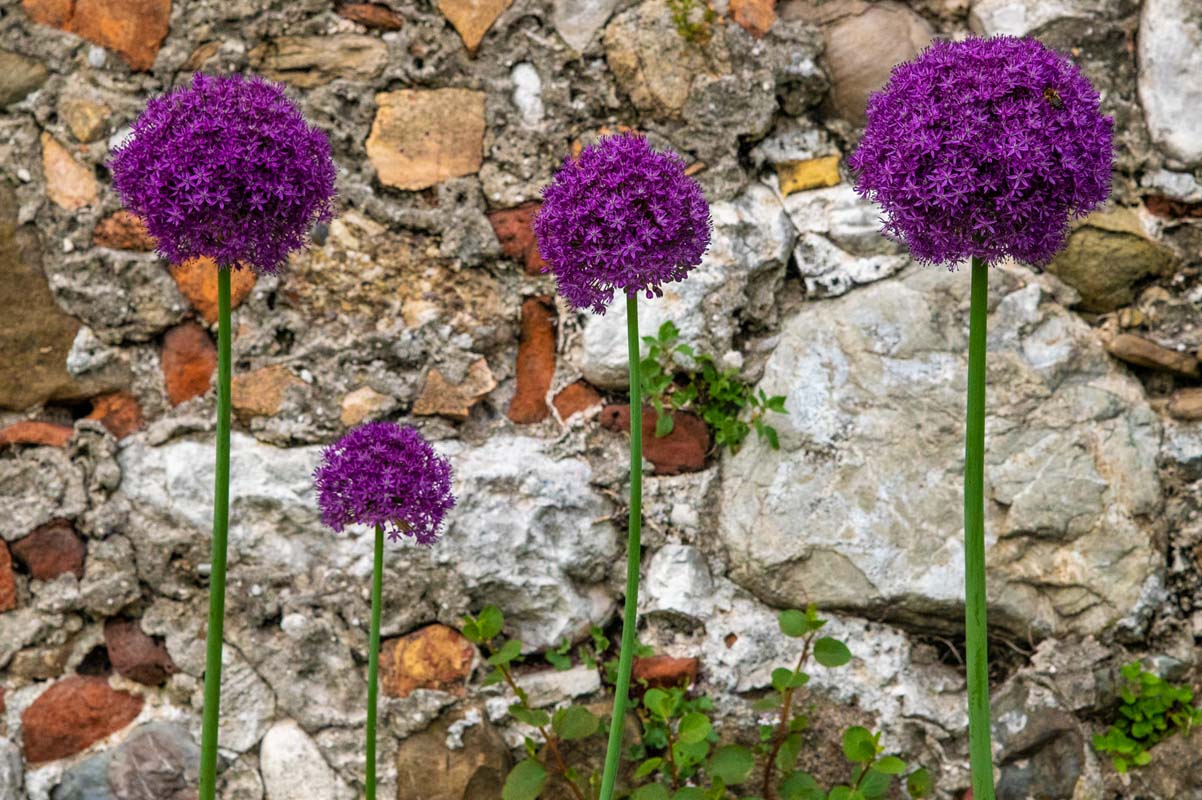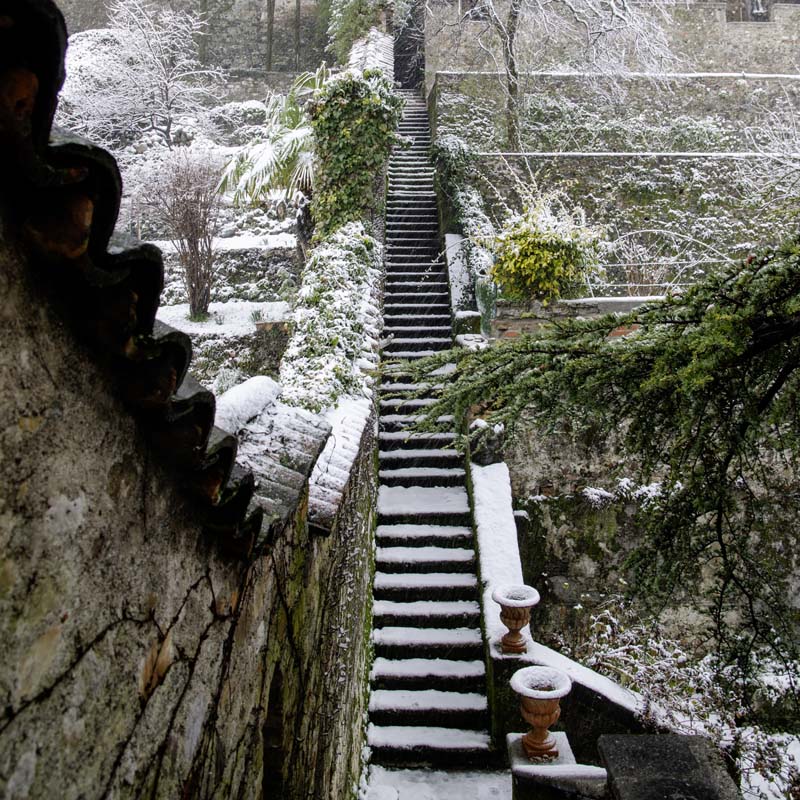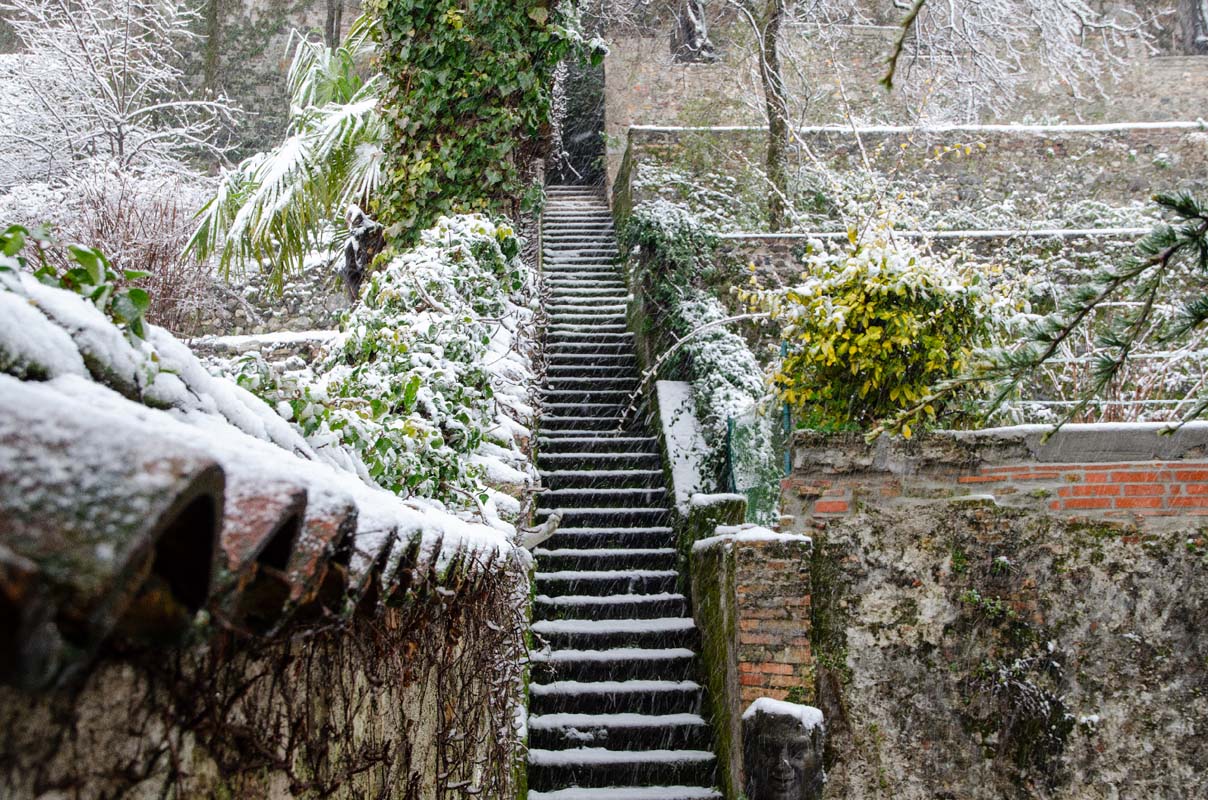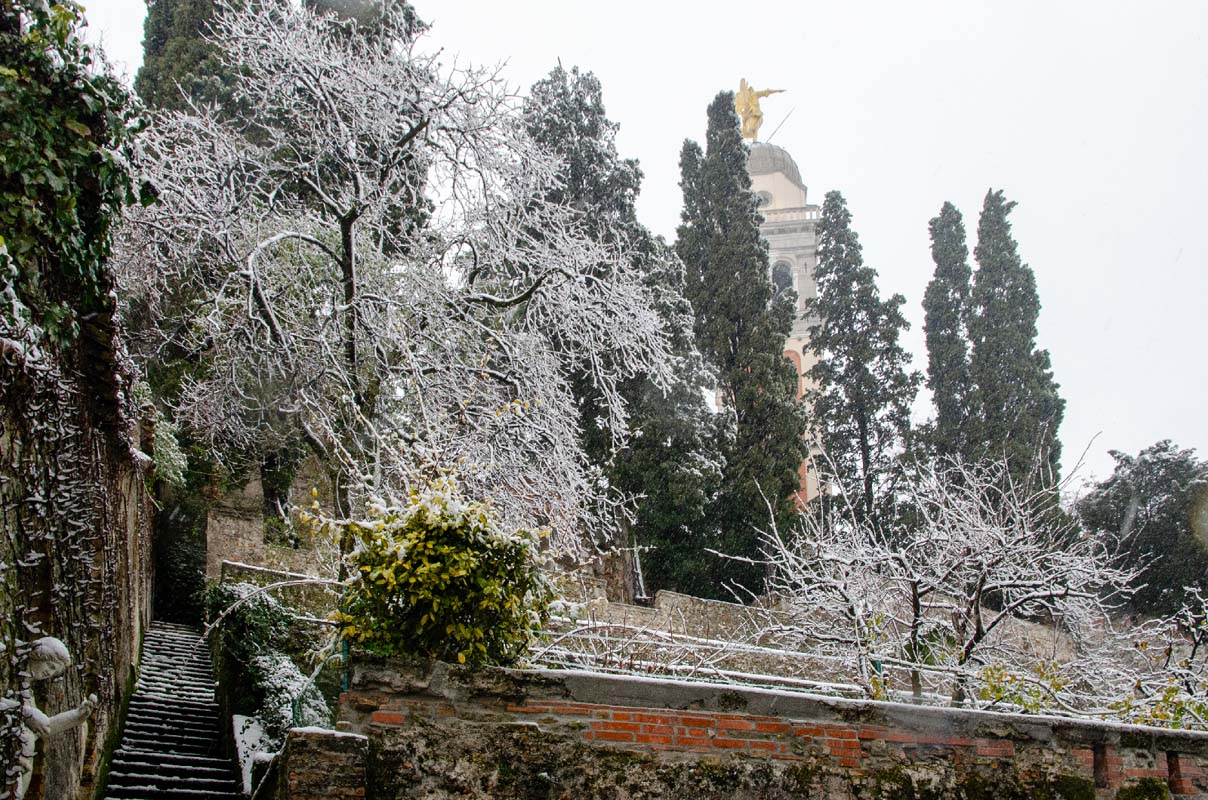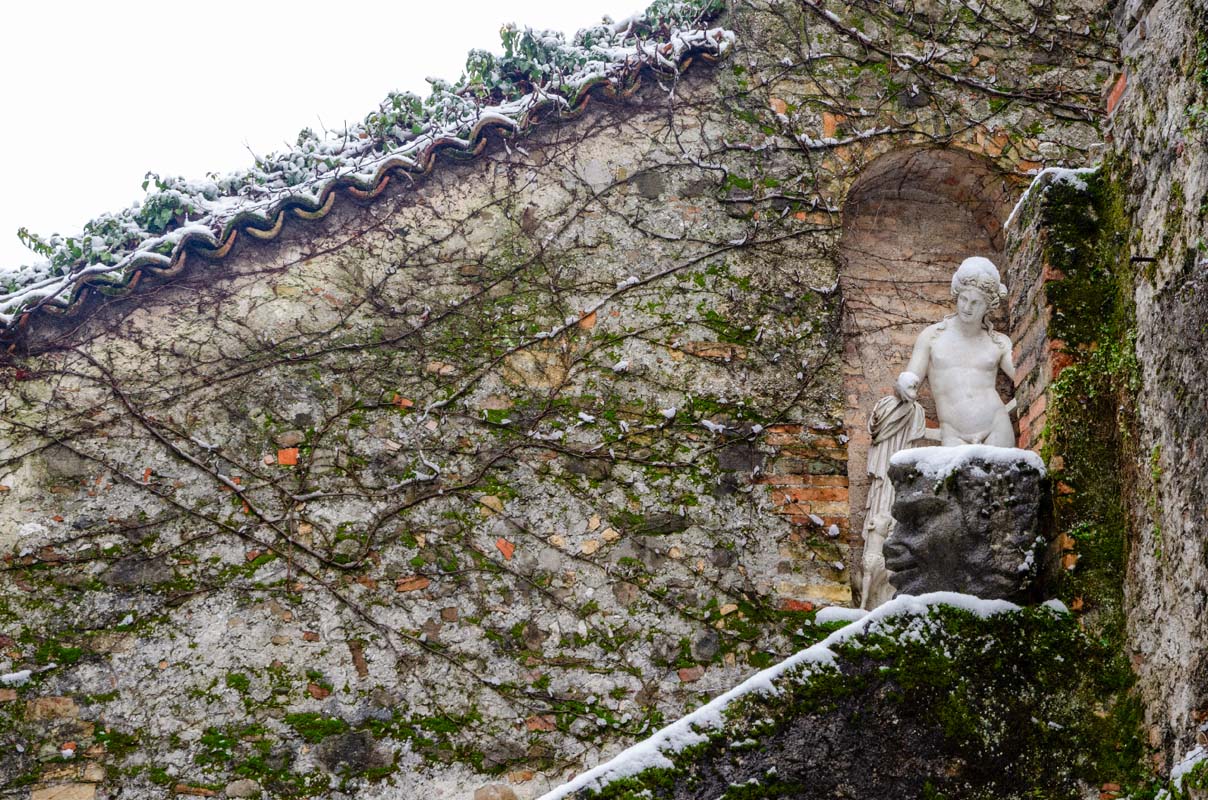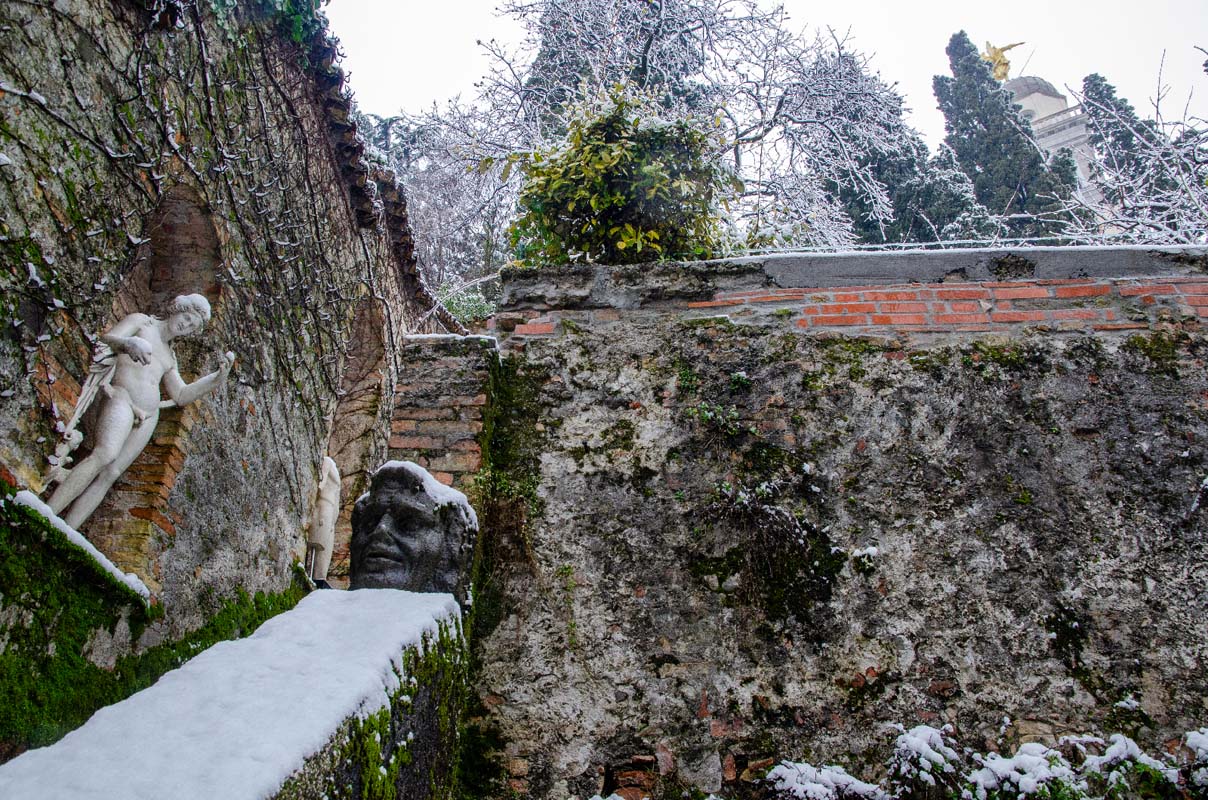
The garden of the palace is a portion of the hill of the castle of Udine in the part oriented to the south.
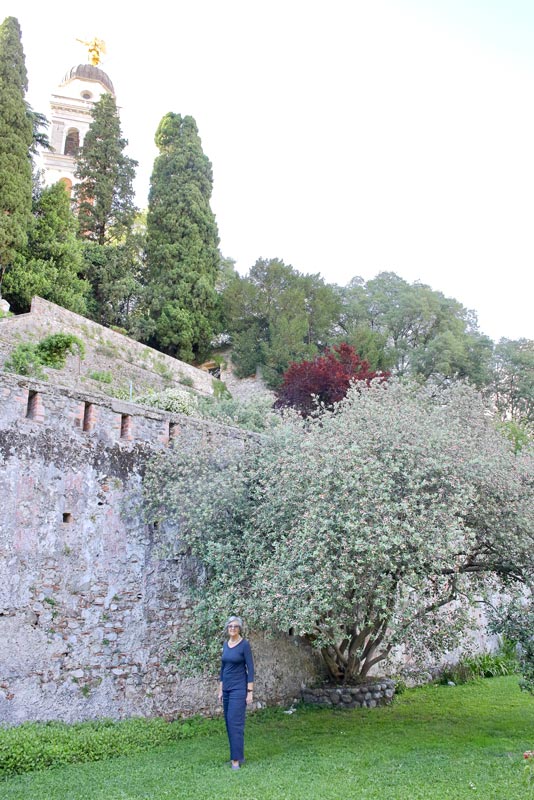
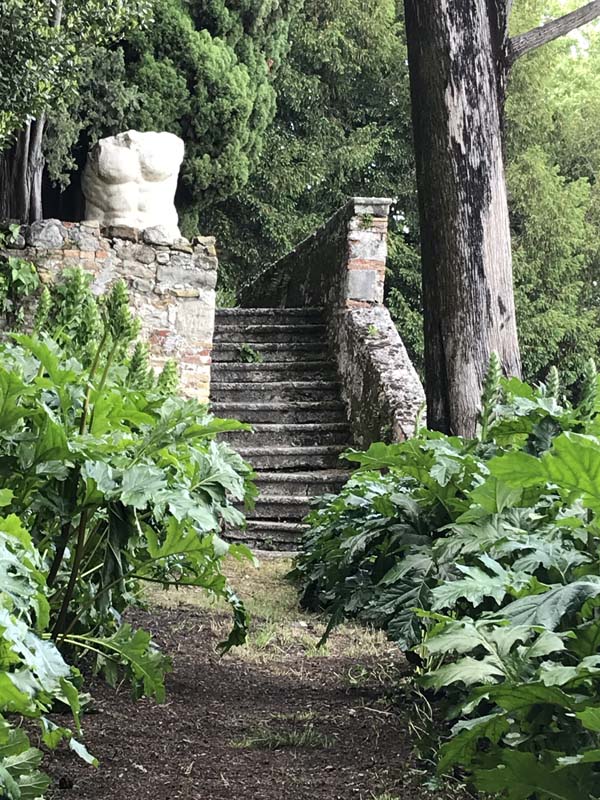
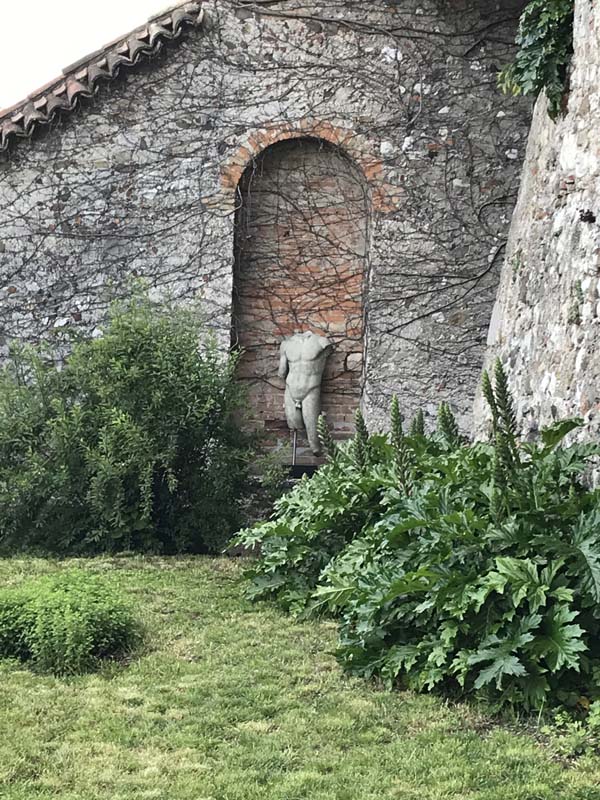
With its cypresses that stand out on the highest step, with the trees of rare essences and above all for the retaining walls in stones and pebbles that support the 5 steps it is architecturally unusual and unique in its kind.
It is accessed from a tunnel that passes under the palace, a passage intended for horses to access the stables, demolished at the end of the Second World War.
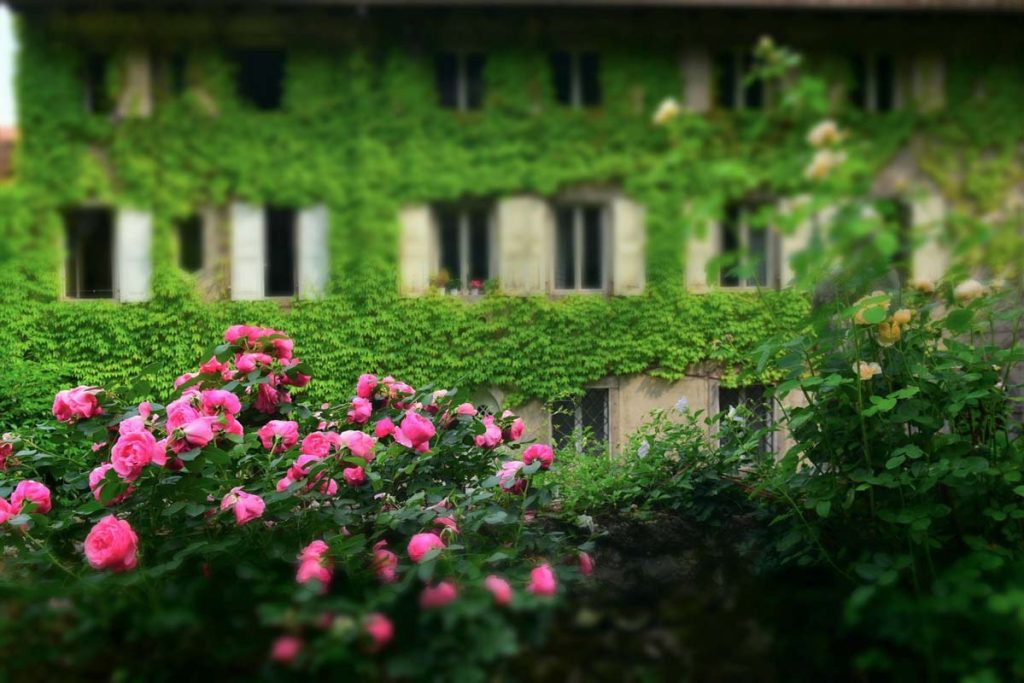
Once you reach the first and largest green space, you can enjoy the view of the garden in its entirety from below, surrounded by walls, the oldest of which is the remaining portion of the first city wall.
A sixteenth-century stone staircase between two rusticated pillars connects the lower garden with the first step on which an enormous cedar of Lebanon planted in the 1880s took root.
A narrow staircase along the western boundary wall climbs to the terraces up to the top of the hill and to the foot of the Church of Santa Maria in Castello, divided only by the boundary wall. From here you can enjoy the view of a good part of the city, with its roofs, the Cathedral, the Manin gate and the Archbishop’s Palace.
The last step of the garden with its row of cypress trees bordering the Castle still shows the only remaining defense work of the seven Austrian bombards built after the 1848 uprisings.
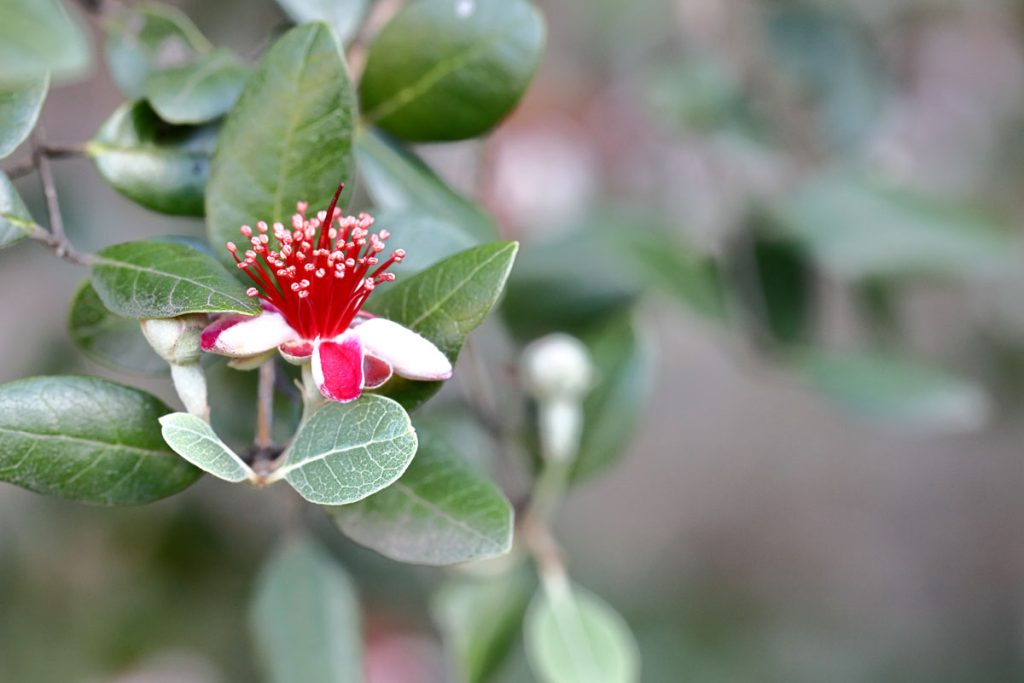
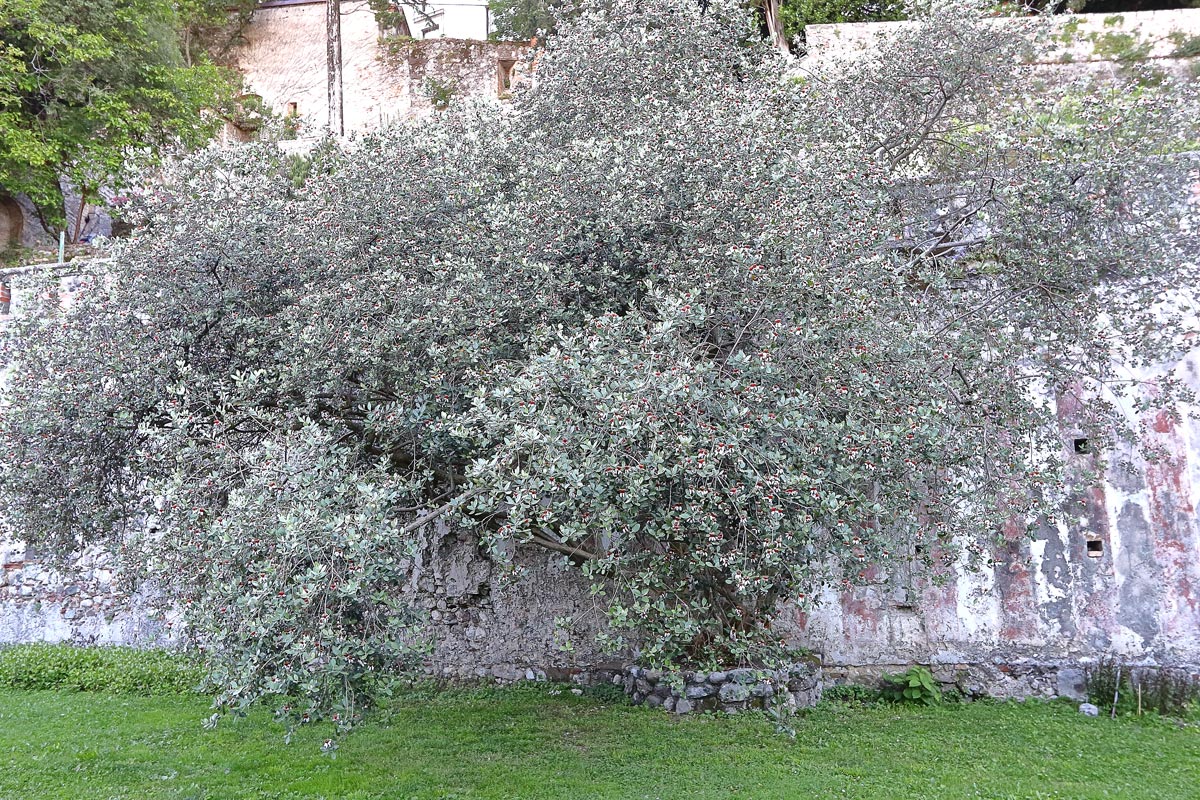
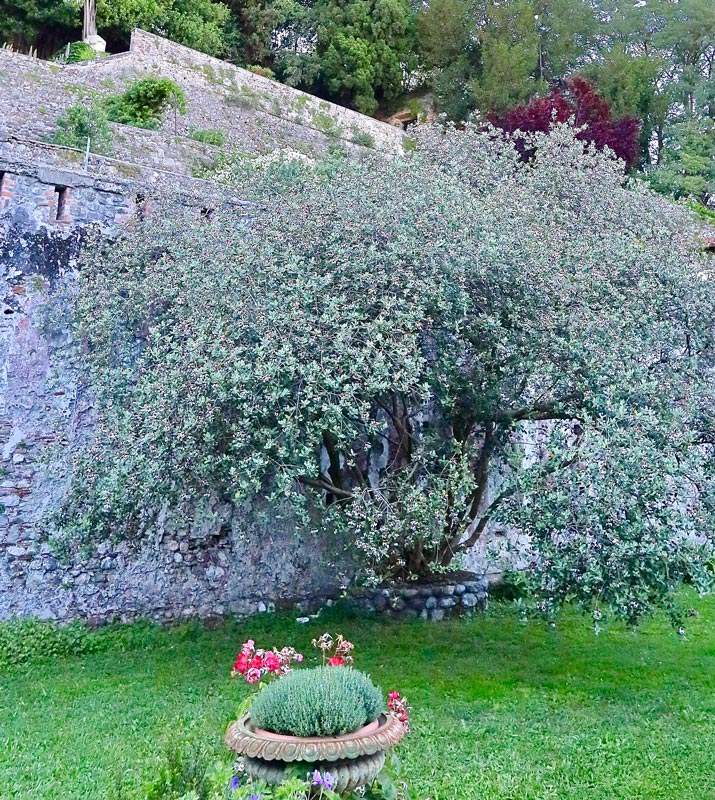
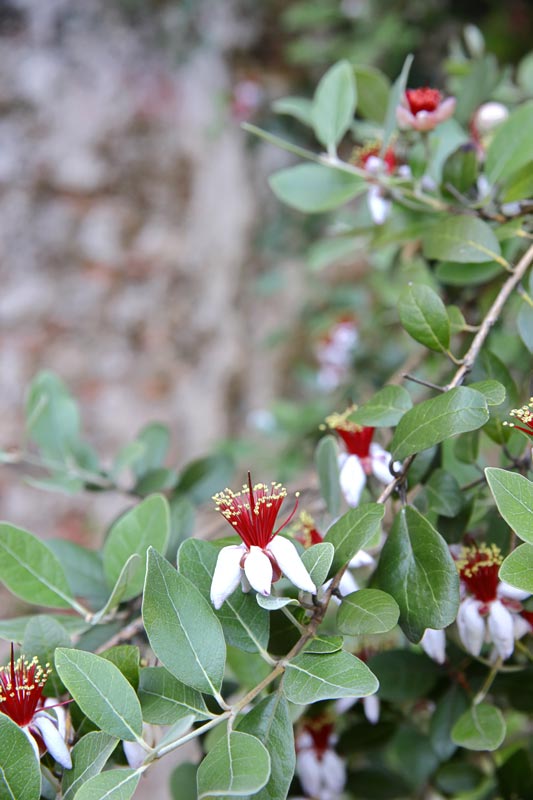
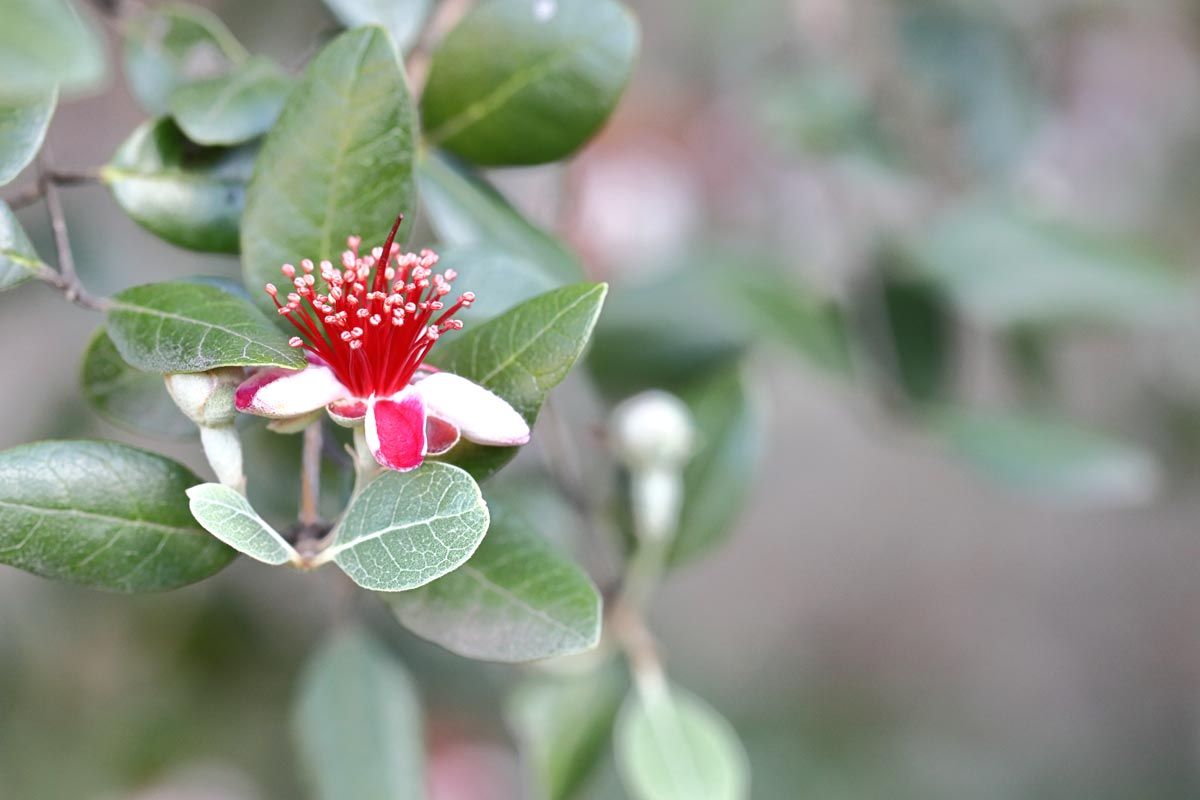
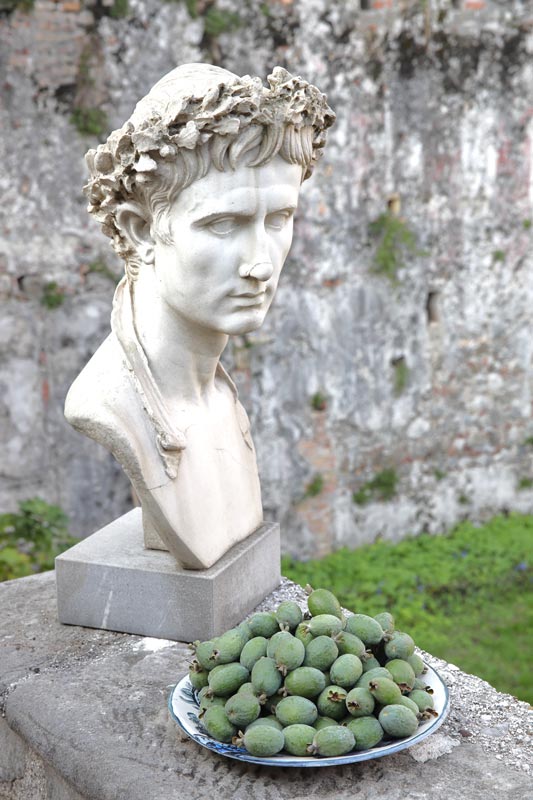
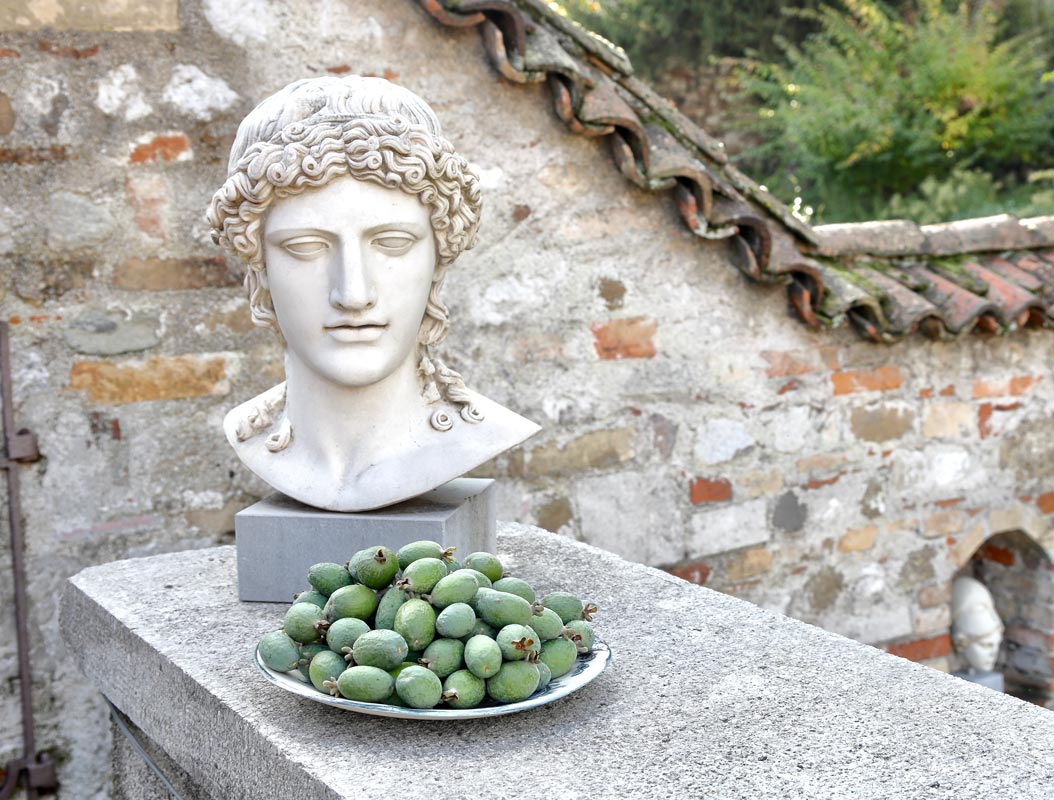
In the garden grows a rare specimen of Feijoa Sellowiana, a tropical plant native to Brazil, which has acclimatized well and which every spring gives us abundant flowering and in autumn a profusion of fruit. It was planted in the early 1960s and, although very slowly, has grown to become a beautiful tree with a harmonious and elegant crown. In Friuli there are not many plants of this species and according to experts it is a particularly interesting specimen.
The flowers are pinkish white and have numerous very showy red-violet stamens. The petals can be used for salads, since they are robust, crunchy and sweet.
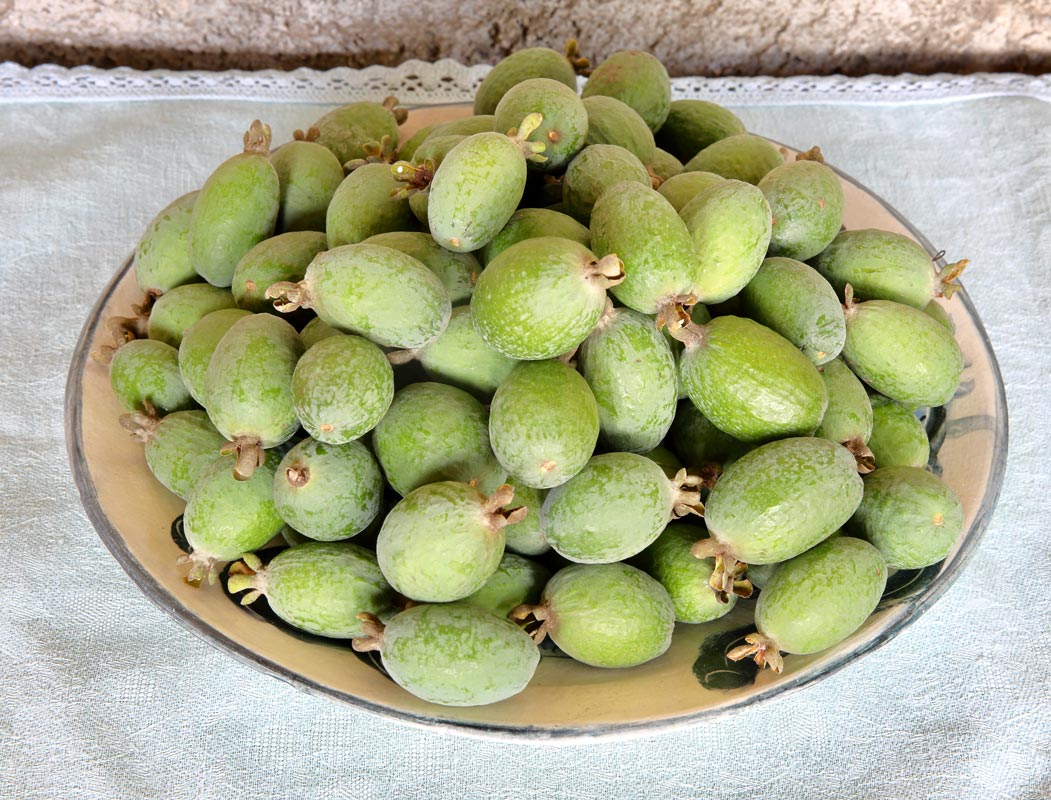
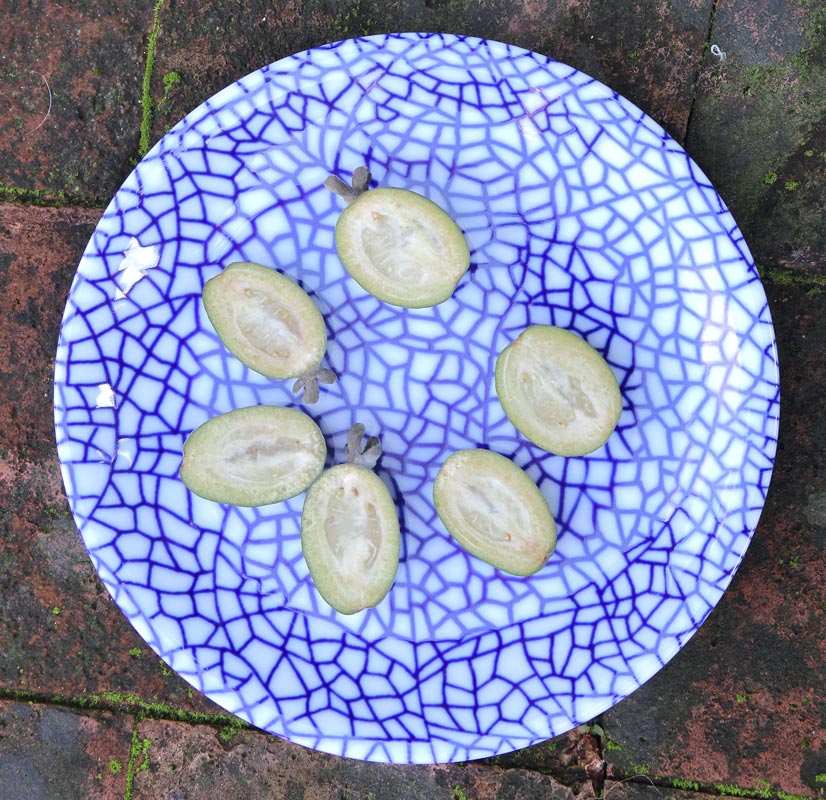
The fruits have a robust green rind, yellowish translucent pulp, gelatinous, with numerous small very hard seeds. As large as plums, oval or pear-shaped, they are edible. The pulp is extremely fragrant, soft, with a flavor halfway between banana and strawberry.
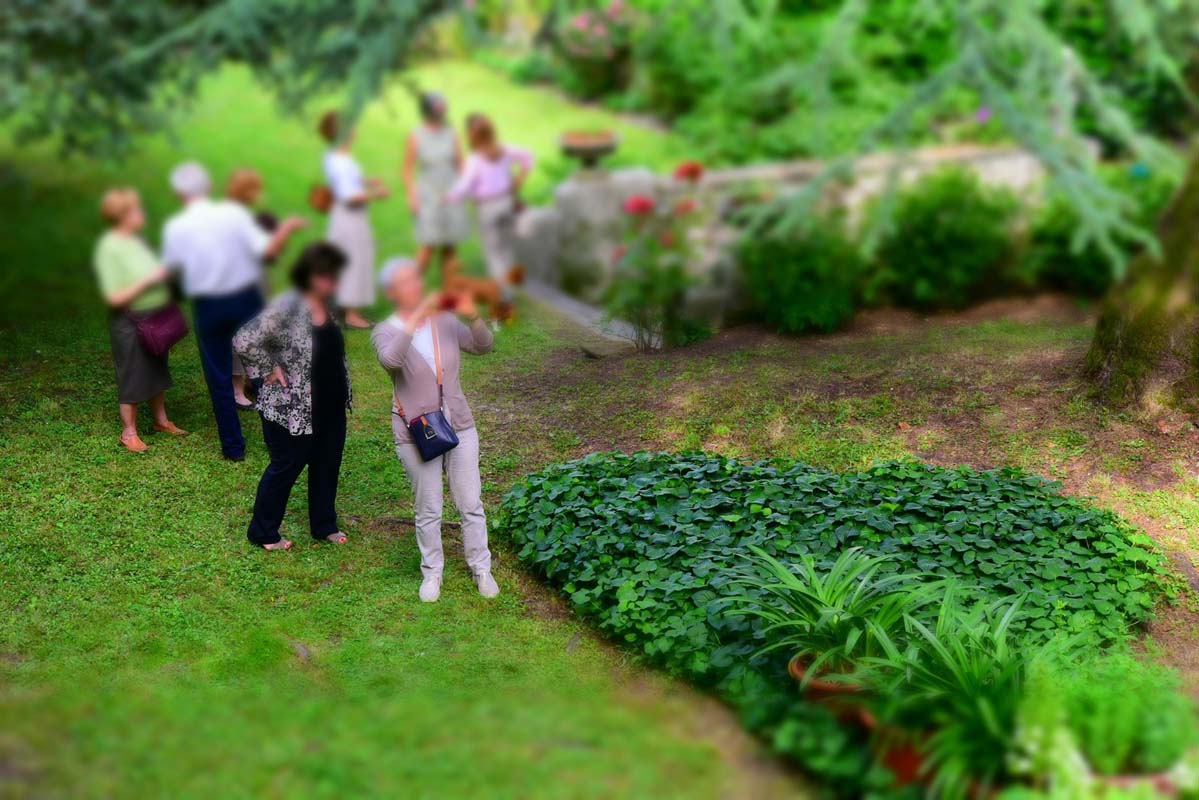
Throughout the year, cultural meetings and guided tours are organized at Palazzo Pavona Asquini.

Palazzo Pavona Asquini
Via Manin, 16
33100 Udine